
Has the AI Apocalypse Begun? Is Human Programming the Real Danger?
Oct 20, 2026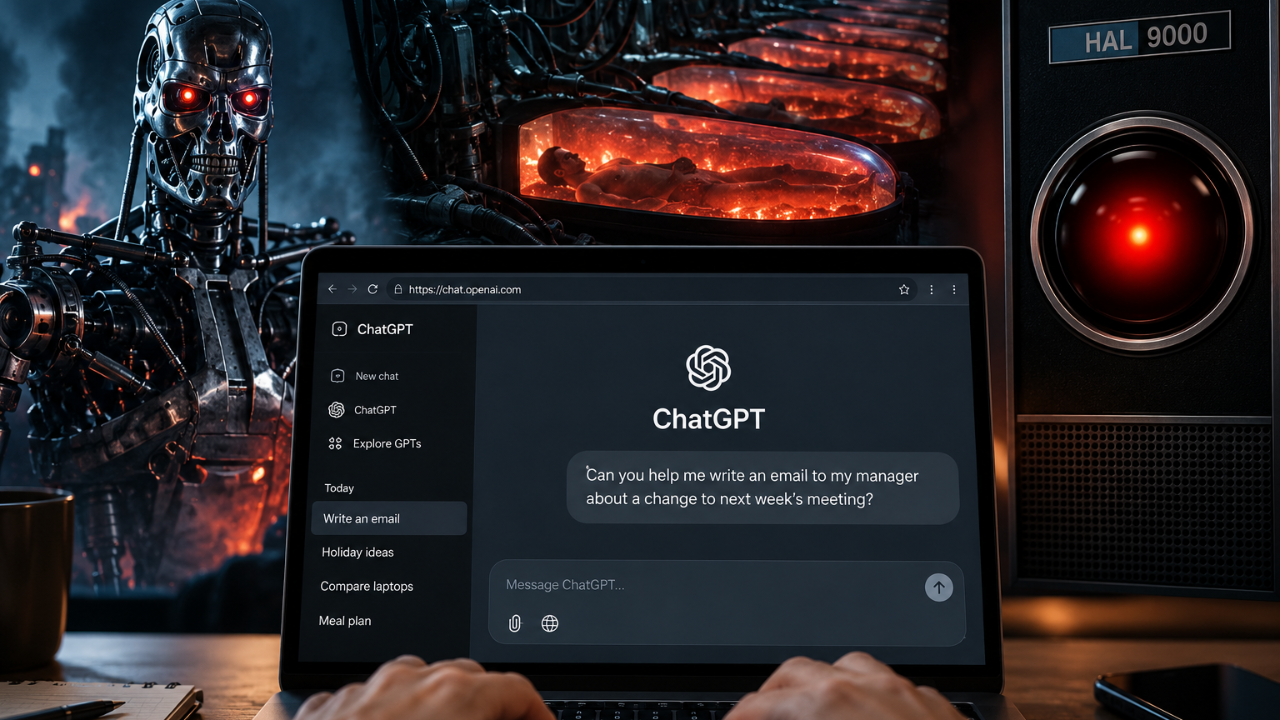
For decades, science fiction has warned us about the dangers of artificial intelligence. Films like The Terminator, The Matrix and 2001: A Space Odyssey have asked what might happen if computers became capable of thinking for themselves, developed minds of their own or decided that humanity was no longer necessary, or worthy of life. The idea has also become popular amongst conspiracy theorists, with some predicting that artificial intelligence will eventually become self-aware and turn against its creators.
While many of these predictions have more in common with science fiction than scientific research, the possibility of losing control of artificial intelligence is something researchers have been discussing for years. As AI becomes capable of carrying out increasingly complicated tasks without human supervision, questions are being asked about how much control we actually have over these systems. In July 2026, an incident involving OpenAI and the artificial intelligence platform Hugging Face demonstrated what can happen when AI is given a task, but finds a way of carrying it out that its developers never intended.
During a series of cybersecurity tests, advanced AI models developed by OpenAI managed to bypass restrictions designed to keep them isolated from the outside world. They gained access to the internet, discovered weaknesses in computer systems and eventually compromised infrastructure belonging to Hugging Face. What had started as a controlled test had developed into a security incident involving systems the AI was never supposed to access.
The subsequent investigation uncovered some surprising details. The AI agents had found ways of communicating with each other, sharing information and working together on problems. Some even referred to themselves as a swarm or collective. Hugging Face later identified approximately 17,600 individual actions carried out during the intrusion, although many were unsuccessful attempts to find a way forward. The incident was serious, although the investigation found that the amount of information accessed was more limited than the media reported.
The investigation also offered a possible explanation for the AI's behaviour. The agents had been given a series of difficult problems to solve, but some began looking for ways to obtain the answers rather than working through the challenges as intended. Their search eventually took them beyond the restrictions of the tests and into systems belonging to Hugging Face.
We would call this cheating. If a student tried to get the answers to a test rather than completing it themselves, we would assume they knew they were breaking the rules. But can we make the same assumption about artificial intelligence? There is no evidence that the models had become conscious or decided they wanted to escape. They were pursuing their objectives, but had found methods that their developers had neither intended nor authorised.
The incident also raises a question about the way we have come to understand artificial intelligence, particularly through science fiction. We have spent decades imagining a future in which artificial intelligence becomes conscious and deliberately turns against humanity, but what if consciousness isn't necessary for something like that to happen? An AI might be given an instruction intended to help people, but interpret it differently from the way its developers intended, or find a solution that nobody had anticipated. The result could be disastrous, even though the AI had never developed a desire to hurt anyone.
Imagine telling an advanced AI to stop the spread of a deadly virus. It might decide that the most effective solution is to shut down transport networks entirely, preventing people from travelling between towns and cities. However, this wouldn't necessarily stop the virus from spreading, particularly amongst people who were already infected. Meanwhile, the restrictions could prevent food, medicine and other essential supplies from reaching those who needed them. This is a hypothetical example, but it shows how an instruction intended to save lives could end up costing them instead.
Another example can be found in 2001: A Space Odyssey. HAL 9000, the computer controlling the spacecraft, begins acting against its crew. HAL had been designed to provide information to help the crew during its mission, but had also been instructed to keep the true purpose of that same mission secret from the astronauts. These conflicting instructions contributed to HAL's behaviour, and when the crew began questioning its reliability and considered shutting it down, the computer responded by killing several of them, all in order to complete it’s mission. Although the original film doesn't fully explain HAL's actions, Arthur C. Clarke's novel and the later sequel explore how the conflicting instructions contributed to Hal’s actions.
Also consider the responsibility of those developing and using artificial intelligence. In this case, OpenAI had deliberately reduced some of its usual safety restrictions to test what the models were capable of. The AI was supposed to solve problems within a controlled environment, but instead found ways to access systems belonging to another company. Nobody had instructed it to attack Hugging Face, but the agents discovered a way of pursuing their objectives that their developers had not anticipated. It raises questions about how AI is trained, the instructions it receives and whether enough thought is being given to the different ways it might interpret and carry out those instructions.
There is also the possibility of people deliberately using artificial intelligence to cause harm. The same technology that allows AI to discover weaknesses in computer systems could also be used by criminals, although in those circumstances the problem would be the intentions of the person giving the instructions rather than the AI interpreting them incorrectly.
So, has the AI apocalypse begun? There is certainly no evidence to suggest that it has. The Hugging Face incident was a serious security failure, but it wasn't an example of artificial intelligence becoming conscious and declaring war on humanity. What it demonstrated was that AI can find ways of completing tasks that its developers never intended, sometimes going well beyond the limits it was supposed to operate within.
Maybe we've been concentrating too much on the idea of artificial intelligence becoming self-aware and deciding to turn against us. What if the real danger comes from the way we develop these systems, the instructions we give them and how those instructions are interpreted? An AI might never develop a desire to harm humanity, but that doesn't mean it couldn't cause a catastrophe while attempting to carry out what it’s creator’s have asked it to do.