
If UFO Research Had a Mount Rushmore
Jan 02, 2026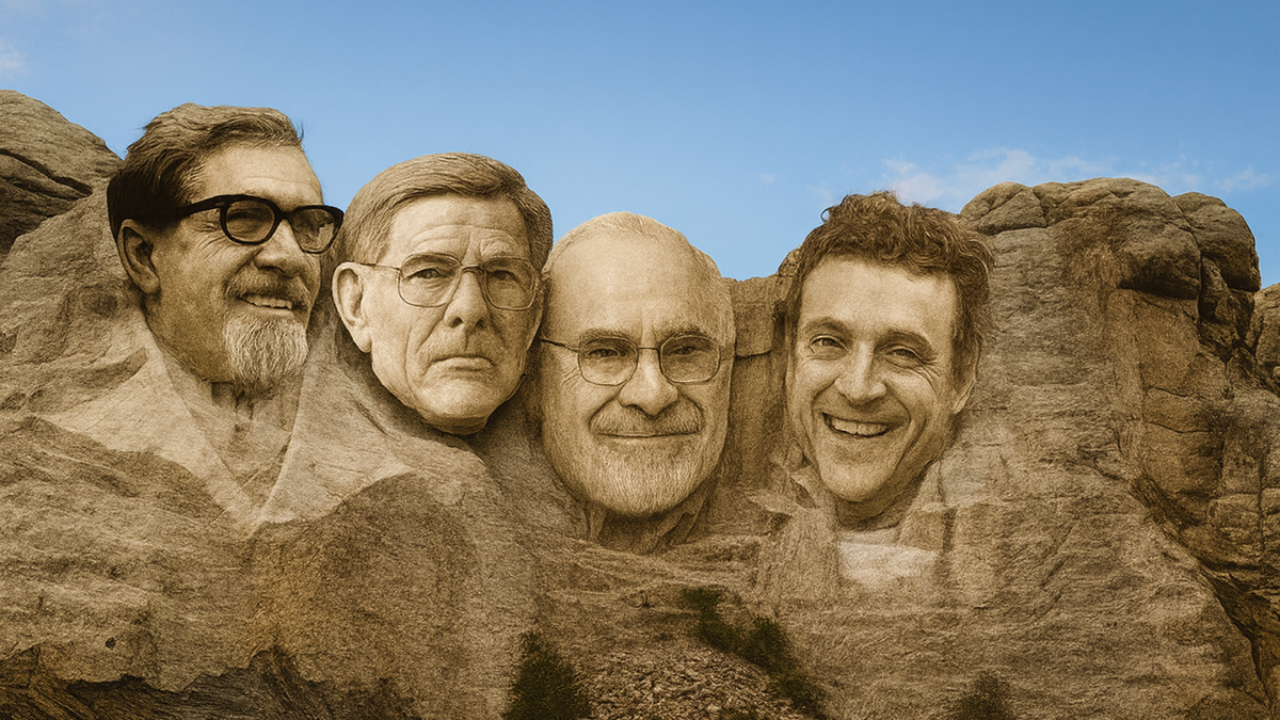
Every so often someone on Twitter asks a question that stays with you longer than expected. This time it was the idea of a “Mount Rushmore of UFO researchers.” It sounds simple, but the more you sit with it, the harder it becomes. Do you base it on evidence, cultural impact, or the people whose work carried the subject through decades of silence?
When I thought about it, four names stood out for very different reasons. My Mount Rushmore would be J. Allen Hynek, Art Bell, Stanton Friedman and James Fox.
Hynek is the foundation. Without him, modern UFO research looks completely different. He began as the scientist brought in to dismiss the whole thing, the academic voice meant to calm public nerves during the Project Blue Book years. As the reports kept coming and the patterns became harder to ignore, his position changed. He never jumped to conclusions and he never drifted into the dramatic, but he accepted that not everything could be explained away. In a field built on certainty at both extremes, Hynek was the rare example of someone willing to shift when the evidence pushed him there. That alone earns his place.
Art Bell shaped the culture in a way nobody else has matched. Before podcasts, livestreams and social media, he created a space where anyone could call in, tell their story and be heard without mockery. You didn’t need credentials or a title. You just needed an experience. Bell didn’t just run a radio show, he built a community, and that community kept the topic alive through years when the rest of the world had moved on. If Hynek gave the field structure, Bell gave it a voice to be heard.
Stanton Friedman spent decades keeping the subject in motion when mainstream interest was at its lowest, and he did so as an academic who treated the subject as something worthy of serious study. Trained as a nuclear physicist, he approached UFOs as a problem to be examined rather than a belief to be promoted. His lectures, debates and writing demonstrated that the phenomenon could be discussed using evidence, documentation and method, rather than speculation alone. At a time when the topic was largely considered career-ending within scientific circles, Friedman showed that it was possible to engage with it professionally and openly. Even those who disagreed with his conclusions acknowledged his persistence and discipline. He helped strip away some of the taboo by proving that curiosity and skepticism could coexist, and without that groundwork, many of the early cases would never have survived long enough to be reconsidered.
James Fox belongs there because he became the bridge into the modern era. Documentary filmmakers come and go, but Fox has managed to keep the subject accessible without diluting it. He brings credible witnesses forward, focuses on cases that matter, and stays close to what can actually be shown. In a time when UFOs are often pulled between conspiracy theories and entertainment, he keeps the conversation grounded. That has value, especially now.
What makes these four stand out isn’t just what they did individually, but how their work fits together. Hynek represents the moment the subject earned the right to be taken seriously. Bell represents the years when ordinary people kept the phenomenon alive through shared stories and late-night conversations. Friedman represents the effort to keep UFOs discussed seriously and scientifically when the wider world had moved on. And Fox represents the shift into the modern era, where credible witnesses speak openly, and the culture around the topic has changed.
The field moves in cycles. There are moments when everyone pays attention and long stretches where only a handful of people keep pushing forward. These four carried the subject through each cycle in their own way. They appealed to different audiences and came from completely different backgrounds, but the subject needed all of them. Without Hynek, there’s no scientific backbone. Without Bell, there’s no community. Without Friedman, the history doesn’t remain part of serious discussion. Without Fox, there’s no modern bridge.
That’s why these four belong on a Mount Rushmore. Not because they were perfect or because they always agreed, but because the conversation around UFOs looks completely different without any one of them. Together, they show how the topic stayed alive long enough for the rest of us to pick up the thread.