
Nick Pope: From the MoD to the Push for Disclosure
Mar 17, 2026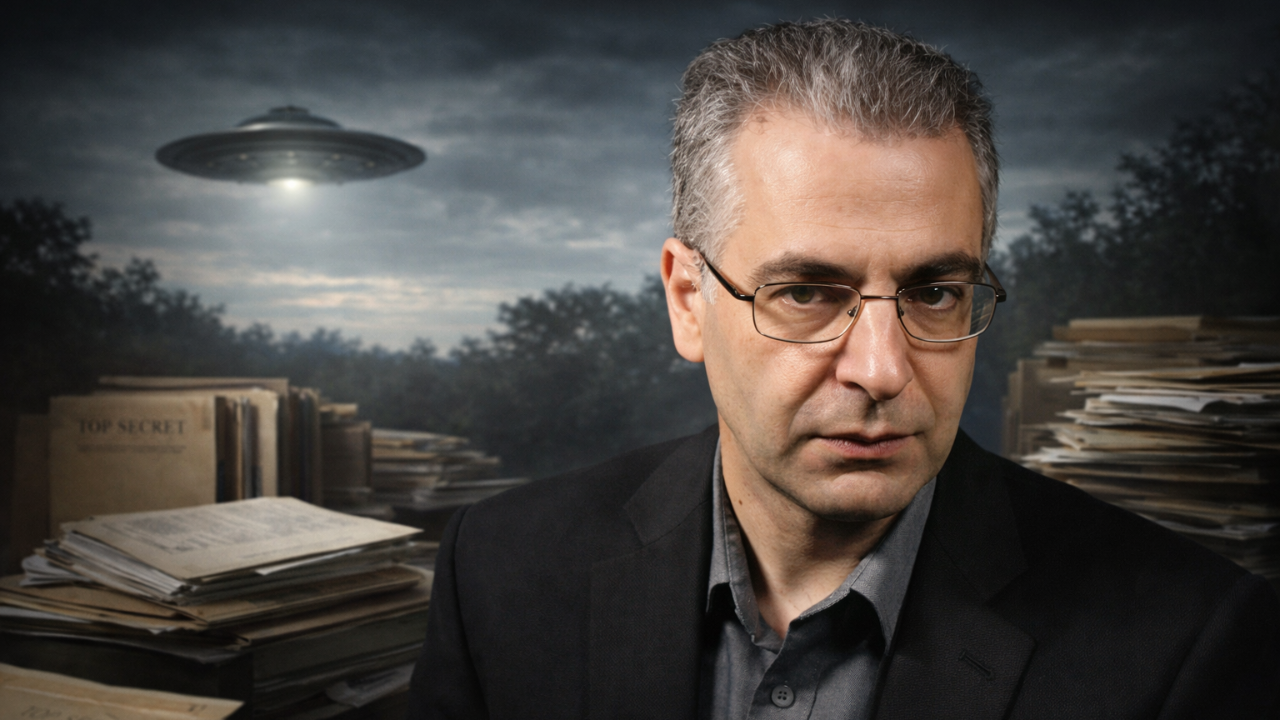
Nick Pope has spent decades at the centre of the UFO conversation in the UK, not as someone chasing stories, but as someone who was once responsible for assessing them. His background is what sets him apart. He was not looking at this subject from the outside. He had already been part of the system that dealt with it.
Recently, Pope announced that he has been diagnosed with stage 4 oesophageal cancer, which has spread to his liver. He made it clear that this is not something he expects to recover from. The way he shared that news was consistent with how he has always presented himself: direct, calm, and without exaggeration. He spoke about his life, his work, and the people around him, rather than focusing on the diagnosis itself.
Before any of the books or television appearances, he was a civil servant at the Ministry of Defence between 1991 and 1994, working within the Secretariat (Air Staff). Part of that role involved handling reports of unidentified aerial phenomena. It is often described as running the UK’s “UFO desk,” which is not wrong in a general sense, but it does not quite reflect how it actually worked.
It was not a standalone unit, and it was not focused on proving or disproving alien life. It was one part of a wider job, dealing with reports as they came in and deciding whether they mattered from a defence point of view. If something was seen in UK airspace, the question was straightforward. What is it, and does it pose a risk?
That meant logging reports, reviewing details, and, where needed, checking them against radar data, aircraft movements, or other available information, including cases involving pilot sightings or reports that could not easily be matched to known aircraft or activity at the time. Most reports were resolved. Some came down to misidentification, others to conditions or perspective. Some did not.
A small number of cases could not be fully explained. Not because they pointed to anything extraordinary, but because there was not enough information to reach a firm conclusion. That gap is where much of the wider interest comes from, and it is also where Pope has remained careful. Unexplained does not mean extraterrestrial. It means unresolved.
Some of the cases most often linked to Pope sit slightly outside his time in that role, but he later became closely associated with them through his work. The Rendlesham Forest incident, often described as the UK’s most famous military UFO case, is one he has written and spoken about extensively, helping bring it into wider public awareness. The Calvine photograph, taken in Scotland in 1990 and long withheld from the public, is another case he has commented on in detail, particularly after its release decades later.
Some have argued that his role has been overstated over the years, but the core of it remains clear: he was part of the system that received and assessed these reports.
After leaving the Ministry of Defence, he did not step away from the subject. He became one of its most recognisable public voices. Through books, interviews, and television work, he helped bring the conversation out of the margins without overstating what the evidence shows. He became a regular voice in documentaries and news coverage, often brought in when the subject moved from speculation into something more serious. He did not present himself as someone with answers. He presented the subject as one that had not been properly addressed.
In recent years, the conversation around unidentified aerial phenomena has shifted, particularly in the United States. Military encounters are now openly discussed, the language has changed, and the subject is no longer dismissed as easily as it once was. It is closer to the way Pope has framed it for years, something that sits between defence, aviation safety, and an unanswered scientific question.
What stands out is that he never made it about himself. In a field where personalities can quickly take over, he kept returning to the same point. The focus should be on the phenomenon, not the person talking about it.
I met Nick Pope at the Awakening Conference in 2023. It was not a long conversation, but it stayed with me. He encouraged me to write, not in a vague way, but directly, as if it were something I should already be doing. That mattered more than I realised at the time. Since then, I have written several books, built my own website, and become active in the field of paranormal research, something I had been interested in for years but had never fully committed to.
There is a part of me that finds it difficult to accept that he may not see the thing he has spent so long pushing for. Disclosure has always been at the centre of his work, not recognition, not building a profile, but moving the subject forward. The idea that he might not be here to see how that develops is not easy to accept.
There will be no final book in the Operation Thunderchild trilogy, and no television adaptation built from that same series. Those are things in the wider picture, but they are still part of a story that now feels unfinished.
In a field where the focus often shifts toward the researchers, Nick Pope kept it somewhere else. Not on him, not on personality, but on the question itself. What is being seen, why it is happening, and whether we are any closer to understanding it. That has always been the point.