
Orbs Didn’t Begin with the Bledsoes, and They Don’t End With Them
Mar 21, 2026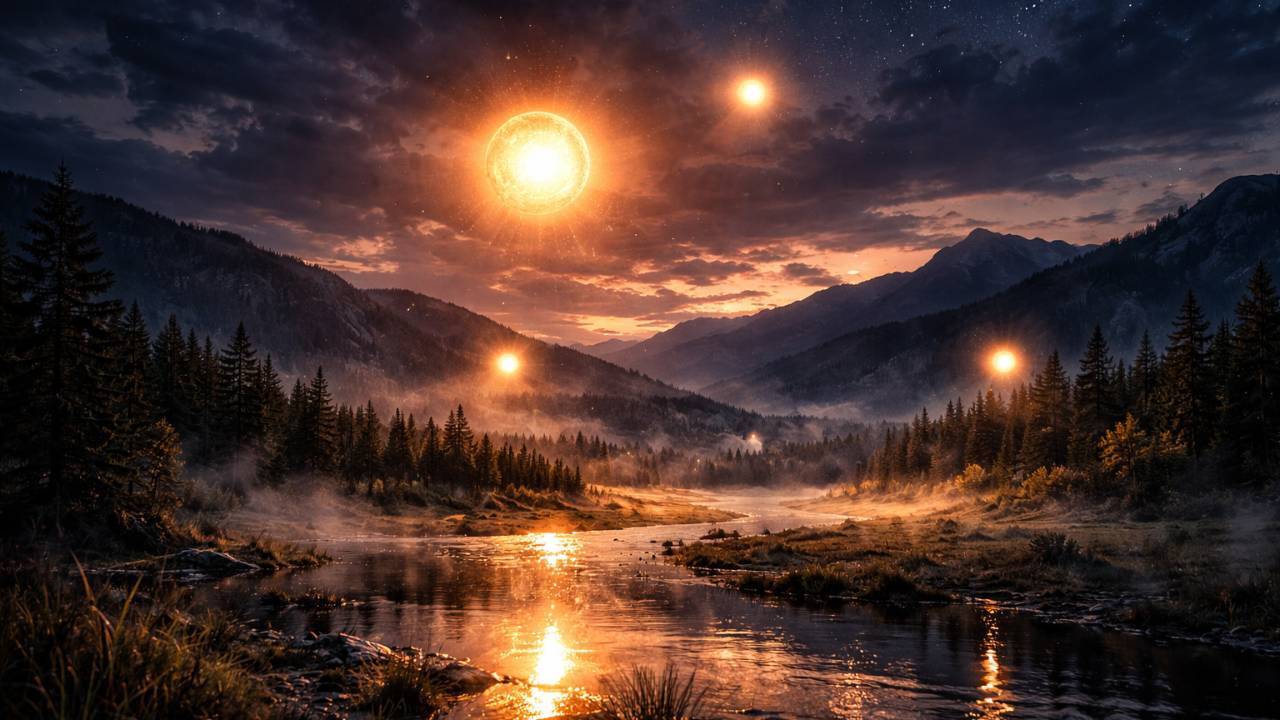
“When people in the media circuit are discussing ORBS, it’s a little weird when they don’t mention the Bledsoes (my family) who are known as the epicenter of the Orb phenomenon. Why won’t they say our name?”
The comment comes from Ryan Bledsoe, the son of Chris Bledsoe, whose reported encounters with luminous orbs in North Carolina have become one of the more widely discussed modern cases tied to this phenomenon.
Chris Bledsoe’s experience began in 2007, when he reported encountering glowing spheres of light at close range. These objects were described as hovering, moving with apparent intent, leaving and then returning rather than appearing as a single isolated event. Other members of the family, along with additional witnesses, reported similar encounters, and the case began to attract wider attention. He has also claimed that these objects are not entirely unpredictable, describing instances where he is able to summon or call them, with the lights appearing in response. That aspect of the case has become a central part of how the experience is presented.
The encounter caught the attention of individuals connected to military and intelligence circles and was looked into beyond the usual civilian reports. That level of interest is part of why the case is talked about more than most.
From that point, the argument shifts. The claim is no longer just that the case matters, but that it should sit at the centre of the phenomenon. Once the focus moves from what is being seen to who should be named in connection with it, the conversation starts to narrow. It becomes less about understanding what is being observed and more about who is associated with it.
Reports of glowing orbs, spheres of light, and structured luminous objects go back decades, long before the Bledsoe family entered the conversation. During the Second World War, Allied pilots reported encounters with what they called “foo fighters,” bright spheres that would pace their aircraft, match their movements, and then disappear without explanation. These accounts came from trained airmen across different regions, often with no connection to each other beyond what they were witnessing, and they remain some of the earliest well-documented examples of this kind of activity.
In the decades that followed, similar reports continued. Pilots and military personnel described luminous spheres moving in controlled ways, sometimes tracking aircraft, sometimes appearing briefly before vanishing. These sightings were logged but rarely explained, and they appeared in completely separate contexts.
In Norway, the Hessdalen Valley has produced repeated sightings of unexplained lights since at least the 1930s, with increased activity in the 1980s. These lights have been tracked on radar, filmed, and measured, sometimes hovering, sometimes moving at speed, and occasionally changing direction in ways that do not match conventional explanations. Despite decades of study, they remain unresolved.
There are also long-standing reports much closer to the ground. In places like Brown Mountain in North Carolina, glowing orbs have been reported for over a century. Witnesses describe lights rising from the mountain, drifting, pulsing, and sometimes disappearing without warning. Investigations have offered possible explanations, but none account for every report.
In Marfa, Texas, the Marfa Lights have been observed since the late 1800s. Small glowing orbs appear in the distance, sometimes stationary, sometimes moving, and occasionally splitting into multiple lights. They have been seen by locals, tourists, and researchers, and while there are explanations involving headlights and atmospheric conditions, the phenomenon itself has never been fully resolved.
Even outside the UFO field, similar descriptions appear. In spiritualist traditions, glowing orbs have long been described as manifestations of energy or spirit presence. Paranormal investigations frequently report small spheres of light appearing in photographs or moving through locations, sometimes seen with the naked eye. While many of these cases can be explained as dust or insects, there are instances where witnesses describe controlled movement or changes in direction that are harder to dismiss outright.
Go back further, and the same descriptions appear under different names. In parts of Europe, including the UK, people reported will-o’-the-wisp phenomena, floating lights seen in remote areas that seemed to move with purpose. The explanation depended on the time and the belief system, but the experience itself remained consistent.
Even within atmospheric science, there are accounts of ball lightning, rare glowing spheres that appear during storms. Some have been described as moving through the air, lasting longer than expected, and behaving in ways that are still not fully understood.
Taken together, these reports describe a pattern that stretches across decades and even centuries. Similar sightings, reported by different people, in different places, with no shared origin and no single case that defines it.
Ryan Bledsoe followed up his original comment by doubling down on that position, writing, “A good litmus test of truth tellers vs people with an agenda is will they or won’t they even mention the Bledsoe case. It is completely illogical, crazy work to claim to be a professed expert or thought leader of a realm of conversation, yet choose to ignore something that has the most evidence and relevance.”
A good litmus test of truth tellers vs people with an agenda is whether they make it about the phenomenon or about themselves, and Ryan Bledsoe failed the test.