
The Dodleston Messages: Tudor England, 2109 and a Borrowed BBC Micro
Feb 16, 2026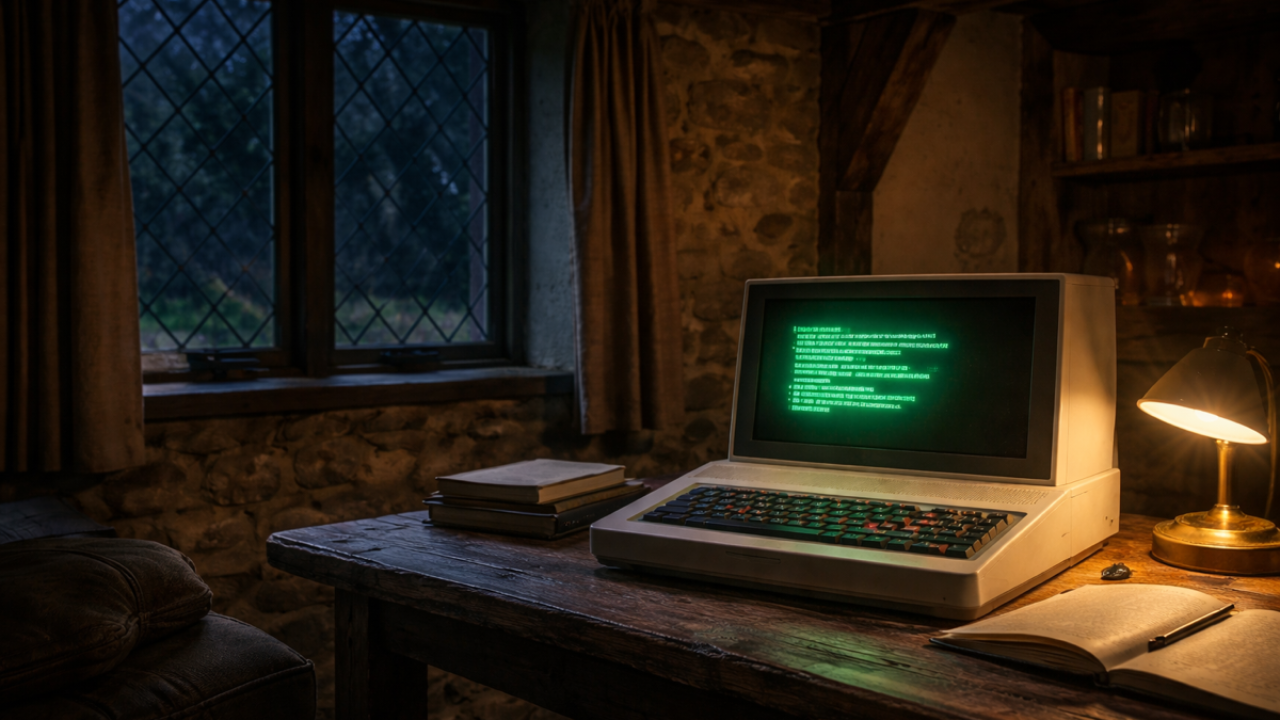
In December 1984, in the small village of Dodleston, England, schoolteacher Ken Webster was living in a historic cottage with his partner Debbie Oakes and their friend Nicola, known as Nick. The house was old, with thick walls and uneven floors, at least several centuries old. Over the Christmas holidays, Webster had borrowed a BBC Micro computer from the school where he taught. It was used mainly for word processing. There was no modem, no internet connection, no wider network. When it was switched off, anything not saved to a floppy disk was not saved.
One evening, Webster turned the machine on and found a file he said he had not created. The message inside was written in unusual, archaic English and addressed to “Ken, Deb, Nick.” It was signed “L.W.” At first, the explanation seemed obvious. It had to be someone in the house. Webster thought Nick might have written it. She denied it. Debbie denied it. The three questioned each other, trying to work out who was responsible. When that went nowhere, they considered whether someone at the school might have used the computer and left a message, but this theory was dismissed, as no one knew that Webster would be borrowing the computer.
Another message appeared. This one was longer. The spelling was inconsistent, and the grammar felt deliberately old. The writer claimed he could hear them speaking in the cottage and see what they had changed. He referred to artificial light as unnatural and suggested they were living in his home. Instead of dismissing it again, they answered. They asked for a name. They asked who the current monarch was. They tried to pinpoint a particular timeframe for the messenger.
The reply placed him in the reign of Henry VIII. He gave his name as Lucas Wayman and described a red stone house on the same land where the cottage stood. He spoke of uncertainty and danger. He referred to the computer as a “lightbox,” something that had come to him after a green light appeared in his chimney and a messenger stepped from it. He believed the device allowed him to speak across worlds. The correspondence continued. Webster would leave the computer on and return later to find new replies waiting. Over the following months, the exchanges reportedly grew into the hundreds. As time passed, Nick moved out of the cottage, but Ken and Debbie remained.
Lucas’ tone gradually changed. England in the 1540s was unsettled. Henry VIII had broken with Rome, and accusations of heresy had deadly consequences. Lucas wrote of fear that the lightbox would draw suspicion. He described being watched. Eventually, he claimed he had been arrested and imprisoned. His writing became shorter and more urgent. Then it stopped.
Not long after, new messages appeared. The language was no longer archaic, and the spelling was modern. The tone was calm. The writer identified himself as Thomas Harden and claimed to be communicating from the year 2109. He did not describe anything mystical. He wrote as if he were explaining a process. According to him, time did not move in a straight line but existed in layers that could occasionally overlap. Certain locations, he suggested, acted as points where those layers met. He described the communication as structured rather than random. Lucas, he implied, had been one of several individuals able to access such contact. The lightbox was not magic in his account but part of a broader spectrum tied to these overlapping planes. He suggested that the site of the cottage itself was significant and warned that continued interference could cause problems. At times, his messages suggested that what was happening was being monitored. Unlike Lucas, he showed no fear. His tone remained calm and clinical. After a period of exchanges, those messages also stopped.
During the time they were receiving the message, Webster and Debbie described disturbances within the cottage. Cold spots, objects moved, unusual footprints. These events were said to coincide with the computer messages. No independent forensic examination of the original hardware has been made public, and the disks have not been subjected to modern analysis.
In 1989, Webster published his account in The Vertical Plane, which remains the primary source for the story. There is no confirmed historical record of a Lucas Wayman in Dodleston during the 1540s, though records from that era are incomplete. Debate continues over the language used in the messages. Some argue that elements resemble early modern English, consistent with the region, while others maintain that it reads as a modern imitation.
Technically, the BBC Micro was not connected to any network. The World Wide Web did not yet exist. Remote access, as understood today, was not possible without additional hardware. Sceptics suggest a hoax perpetrated by Ken, Debbie and possibly Nick during the early stages as explanations. The messages were originally saved by Ken and Debbie, but it was lost over time, so an examination is not possible.
The Dodleston Messages begin with a single unexplained file on a borrowed computer. They move through Tudor England, an arrest for suspected heresy, and then to a voice claiming to speak from the future. And then they end. What remains is the account of what Ken, Debbie and Nick said took place inside that cottage. Whether it was a hoax, misinterpretation, or something else entirely is still debated, and likely never to be solved