
The Marjah Guard Post Encounter: Another Strange Sighting from Afghanistan’s Remote Regions
Jan 10, 2026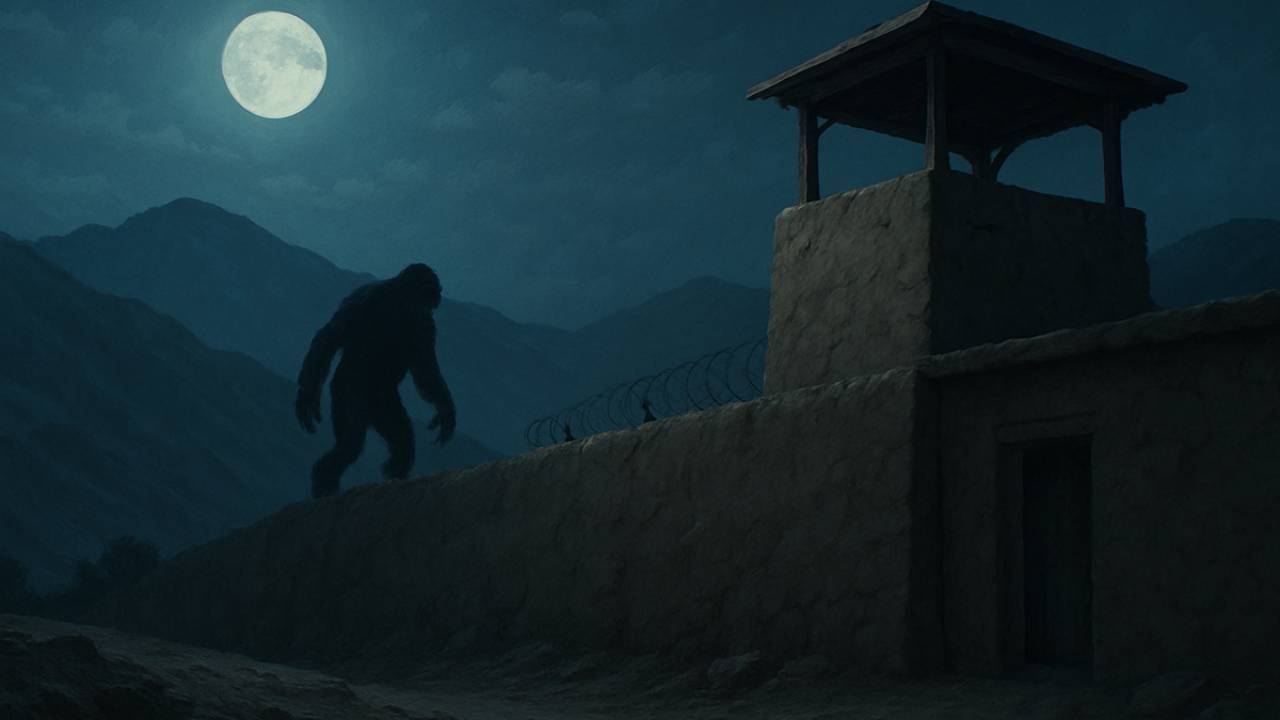
In 2010–2011, a U.S. soldier stationed in Marjah, Helmand Province, was working a late-night guard shift on the wall of the base. The post sat on top of the mud wall that surrounded the compound, high enough to give a clear view of the fields outside. The roof above it was simple, built by the soldiers for a bit of cover. Nights in that part of Helmand were normally busy with noise from the surrounding compounds, with dogs and goats moving in the dark. On this night, everything had gone quiet.
Somewhere between two and four in the morning, he heard footsteps on top of the wall behind him. The wall was narrow, around a foot thick, and not the kind of surface anyone could run across in the dark. The footsteps were fast and steady. Each one made a hard, sharp clicking sound, nothing like boots or the softer movement of a dog.
The steps reached the short section where concertina wire had been placed. Instead of stopping, something moved upward and onto the roof of the post. The boards above shifted under the weight. The movement continued across the roof in a straight line, then left it and landed on the roof of the nearby mud hut where Afghan guards were sleeping. After that, the sound moved away into the dark and did not return.
He turned and checked the area through the thermal sight, expecting to see heat where the movement had been, but nothing showed. When daylight came, there were no tracks or marks that explained what he had heard.
Sightings of strange figures have been reported in the region for many years. In the Hindu Kush, accounts of the Barmanou describe an upright, human-like figure moving through remote valleys. Early in the war, a story from Kandahar began circulating among troops about a much larger being encountered near a cave system. The details changed as it spread, but it became one of the most repeated tales from that part of the country.
More recent reports from neighbouring areas describe similar figures. One came from the Wakhan Corridor in the far northeast, where Afghan shepherds described a large upright figure walking along a ridge at dusk. They were too far away to make out details, but they noticed it stayed on two legs the entire time and moved with a steady gait before disappearing over the ridge. Bears in that region normally shift to all fours on uneven ground, which is why the sighting stayed in their memory. The description later appeared in a travel account written by European trekkers who spoke with the shepherds and repeated the details without adding speculation.
Another account came from the area near the Tajikistan border, where local hunters reported seeing a figure associated with the Almas traditions found across Central Asia. They said the figure moved upright across a rocky slope and dropped out of sight behind a line of boulders. When they checked the area, they could not find tracks clear enough to confirm what they had seen. Their description was later included in a journalist’s notes while documenting stories from communities along the Pamir foothills.
These reports sit alongside the long-standing Barmanou sightings from northern Pakistan and the well-known but disputed Kandahar story from early in the war. They show that unusual sightings do occur across the region, even if they are spread out and described differently from place to place.
Local belief across Afghanistan adds another layer. In many rural areas, unexplained movement at night is often linked to jinn. They are described as unseen beings that can move across rooftops, walls and open ground without being noticed directly, recognised instead by sudden silence or by sounds that have no clear source. Afghan police and soldiers sometimes warned foreign troops about certain compounds or corners of villages where jinn were said to pass through after dark. For them, noises on empty roofs or footsteps in quiet rooms did not automatically suggest an intruder or an animal. They were part of a longer tradition that had already given those places a reputation.
The region has carried stories of unusual beings for generations, from the accounts in the Hindu Kush to the quieter reports from the borderlands and the isolated valleys. Each one is different, shaped by the people who witnessed it, but they all share the same pattern of something moving through the landscape in ways that do not match the ordinary. This incident from Marjah becomes another entry in that long history of unexplained moments in the region.