
Trump Waived UFO NDAs. So Why Aren’t Whistleblowers Talking?
Aug 13, 2026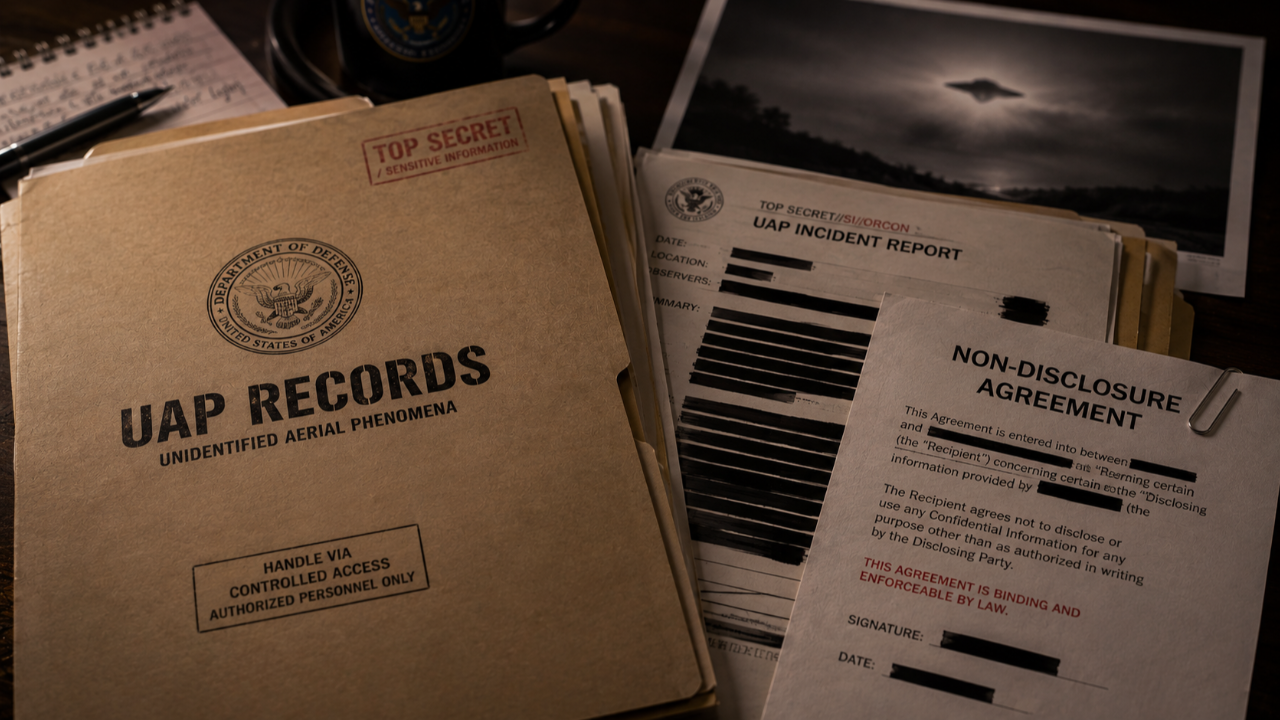
On July 21, 2026, President Donald Trump directed government agencies to waive certain non-disclosure agreements for former government personnel and contractors involved in UAP investigations. This quickly led to online discussion, with many people now believing UFO whistleblowers are free to reveal everything they allegedly know on social media, podcasts and YouTube channels.
It is understandable that many people would think this, but the situation isn’t quite as simple as that. The most important point is the one getting lost: the waiver only allows people to provide information through authorised government channels. It doesn’t give them permission to reveal that information to the public.
An NDA is a legally binding agreement restricting a person from disclosing certain information. It is separate from the rules governing classified information. Under the new process, former employees and contractors with UAP information can meet with designated officials at AARO or PURSUE, and applicable NDAs can be waived during those authorised discussions. It doesn’t give them permission to say whatever they want, wherever they want.
That is an important distinction. Being allowed to answer questions from an authorised government investigator doesn’t mean they are allowed to give the same information to a journalist, podcast audience or their followers on social media.
Many people who worked on sensitive government programmes had access to classified or otherwise protected information. Those restrictions don’t simply disappear when an NDA is waived. Classified information doesn’t automatically become public information, and removing an NDA isn’t the same thing as declassifying classified information.
The administration itself has made that clear. A senior official describing the NDA waiver said it was not a declassification order and that it only allowed personnel to come forward through government channels. Information provided through that process would still be reviewed using the government’s existing declassification procedures.
If someone genuinely possesses classified information relating to UAPs, the NDA waiver doesn’t mean they can simply publish it online. The information may now be easier to provide to authorised officials, but if it is going to be released publicly, it will still have to go through a separate review and declassification process.
The government’s own UAP disclosure programme shows how that works. The Presidential Unsealing and Reporting System for UAP Encounters, or PURSUE, involves finding records, reviewing them, identifying material that can be declassified and then releasing it publicly. A fifth instalment of material was released on August 7, with further releases expected on a rolling basis.
We have also seen this with previous whistleblowers. David Grusch has spoken publicly about some of his allegations while saying there was other information he could only provide in an appropriately classified setting. Following Trump’s decision, Grusch welcomed the move and said he hoped it would encourage people who believed NDAs prevented them from speaking to Congress or the Executive Branch to come forward.
Grusch wasn’t saying people could now tell the public everything they know. He was talking about removing an obstacle that prevented them from providing information to the government.
There is another side to this that is worth considering. Since the announcement, I have seen plenty of comments arguing that people who previously cited NDAs but don’t come forward must be hiding behind them because they never had any information in the first place.
That may be true in some cases. It is possible that some people who have hinted at possessing extraordinary information don’t actually know as much as they suggest, and that citing an NDA gives them a convenient reason for never providing the details. We shouldn’t automatically assume that everyone who says they are restricted by an NDA really is sitting on extraordinary information.
But we shouldn’t automatically assume the opposite either. An NDA has never been evidence that someone’s claims are true. Equally, the fact that someone doesn’t suddenly start revealing everything publicly now doesn’t prove they were hiding behind one. What the new process potentially changes is their ability to provide information during authorised discussions with government investigators, not necessarily what they can disclose to the public.
Trump’s decision has removed one potential barrier between alleged witnesses and authorised government officials. It hasn’t removed every barrier between those witnesses and the rest of us. Whether it leads to anything significant is something we can only judge by what happens next.