
What Has Gone Wrong With Ufology? From Bullying to Allegations of Sexual Misconduct
Oct 28, 2026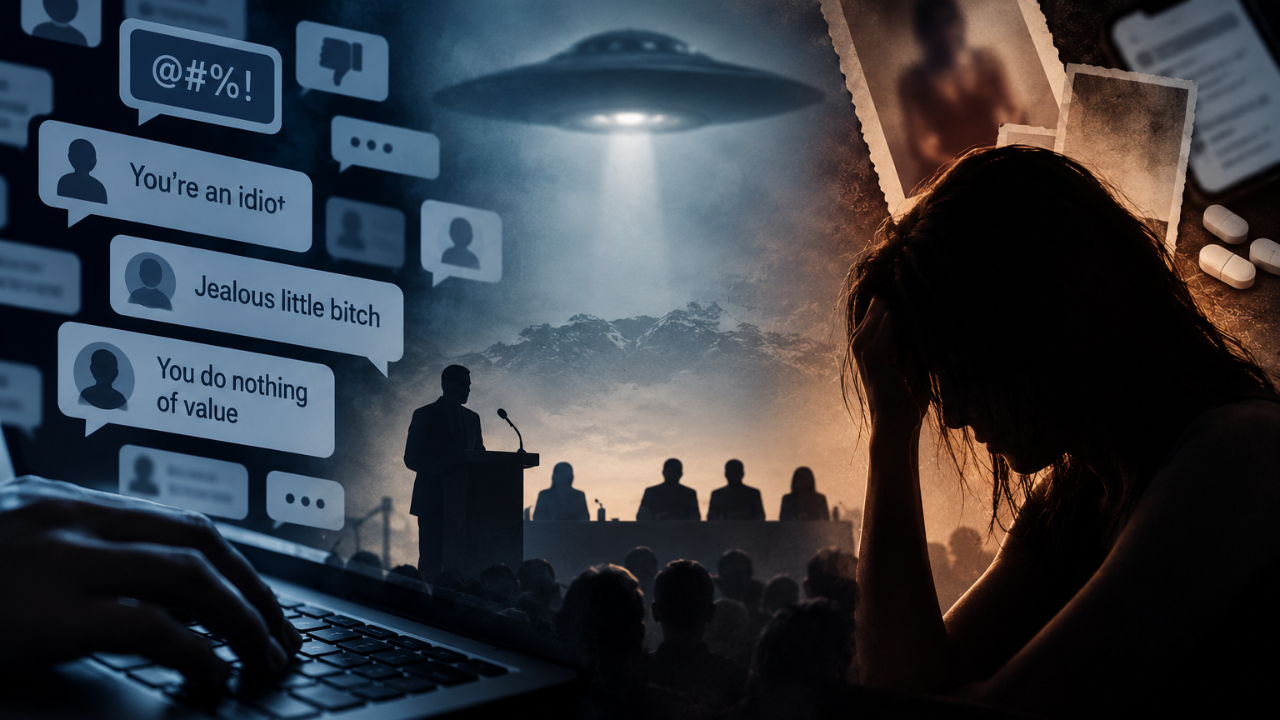
For decades, those involved in ufology have argued that the subject deserves to be taken seriously. People should listen to witnesses rather than ridicule them, allow researchers to investigate unusual events without dismissal, and demand more transparency from governments.
Yet spend any significant amount of time following the UFO community on social media, and a different picture emerges. Researchers argue with one another, accusations fly, and disagreements over evidence often become personal. None of this is new, but recent allegations of sexual misconduct and psychological manipulation have raised much more serious concerns about the behaviour of some people involved in the field.
Disagreement has always been part of UFO research, and there is nothing wrong with challenging someone’s claims or conclusions. The problem begins when criticism of an argument becomes an attack on the person making it.
I’ve experienced this kind of hostility myself, including when writing about subjects unrelated to the paranormal. It’s something I’ve encountered over several years, although one exchange within the UFO community in August 2026 was particularly unpleasant.
Content creator Jay Anderson posted that he would never speak at the Contact in the Desert conference again, complaining that speakers weren’t paid or reimbursed for travel expenses. I responded by saying his comments reinforced my view that money was his primary motivation for being involved in the subject.
Looking back, I recognise that my comment was confrontational. Rather than addressing his argument about conference payments, I questioned his motivations. I’ve been trying to improve how I respond to disagreements, and I recognise I have a responsibility to examine my own behaviour.
Anderson was entitled to disagree with me, and expecting payment for speaking engagements is not unreasonable. However, his responses went far beyond challenging my comment. He called me a “fucking idiot”, a “random lurker who does nothing of value” and a “jealous little bitch”.
The exchange continued for over three hours, during which he repeatedly insulted my writing, books and website. Other accounts joined in, including one that used homophobic slurs. Many of Anderson’s comments have since disappeared from the discussion, although I kept screenshots of several responses.
My original comment was provocative, but the subsequent exchange illustrates how quickly disagreements can become personal. Similar behaviour has been visible across social media for years, and it seems particularly unfortunate within a community that repeatedly asks witnesses and researchers to be treated with respect.
In April 2026, UFO researcher and podcast host Kelly Chase publicly made allegations involving her former creative partner, Jay Christopher King. The two had worked together on Cosmosis, while King was also associated with The Experiencer Group, an organisation connected with people reporting unusual experiences.
Chase said she had been contacted by someone alleging inappropriate sexual interactions with King, including unwanted sexual behaviour and an explicit photograph. She said she received screenshots and heard from other women with similar stories, but she could not independently verify all the accounts.
Chase ended her professional relationship with King, while SpectreVision announced that it was suspending its relationship with him following the allegations.
King later issued a statement, which Chase shared on her podcast, acknowledging poor judgement and that some of his decisions had caused hurt. However, he also disputed aspects of the accounts circulating about him, describing some as exaggerated or mischaracterised. His acknowledgement should not be treated as an admission that the specific allegations were true.
The controversy continued in June when Chase released an episode of her Inquiry podcast titled Starlight Sickness. She raised concerns about psychological manipulation, including allegations involving drugging, deception and the possibility that beliefs about surveillance had been deliberately influenced.
In October, Chase made further public statements alleging that she believed King had drugged her, or had been involved in drugging her, following a UFO-related event in 2023. These allegations remain unverified, and King’s earlier statement should not be presented as a response to the more recent claims.
The allegations raise important questions about the responsibilities of people working with individuals who report unusual experiences. Some approach experiencer organisations frightened or confused, looking for explanations or reassurance. They may disclose deeply personal information to people they believe understand what they have been through.
Whatever the explanation for those experiences, organisations offering support need appropriate boundaries and safeguards. This does not establish that wrongdoing occurred within The Experiencer Group, but it highlights the importance of protecting people who may be particularly vulnerable.
Ufology has spent decades calling for transparency, evidence and accountability from governments and scientific institutions. Those principles should also apply when questions arise about people within the community.
That doesn’t mean allegations should automatically be accepted as fact. People reporting misconduct deserve to be heard and treated respectfully, while those accused deserve fairness and the opportunity to respond. Serious allegations require appropriate investigation, not speculation or judgment on social media.
The same applies to disagreements over UFO research. People should be able to question claims without becoming targets of personal abuse, and researchers should be able to defend their work without treating criticism as an attack.
It would be unfair to judge everyone involved in ufology by the behaviour of a few individuals. Many researchers continue to investigate unusual reports and examine evidence without getting drawn into public arguments. Their work is often overshadowed by the more confrontational personalities.
Whether ufology has become worse over the years is difficult to establish. What is clear is that personal hostility remains a problem, while recent allegations of considerably more serious misconduct have raised additional concerns about trust and accountability. For a community that has spent so long asking to be taken seriously, these are issues worth examining.