
When an Imaginary Spirit Answered Back: The Philip Experiment
Jan 20, 2026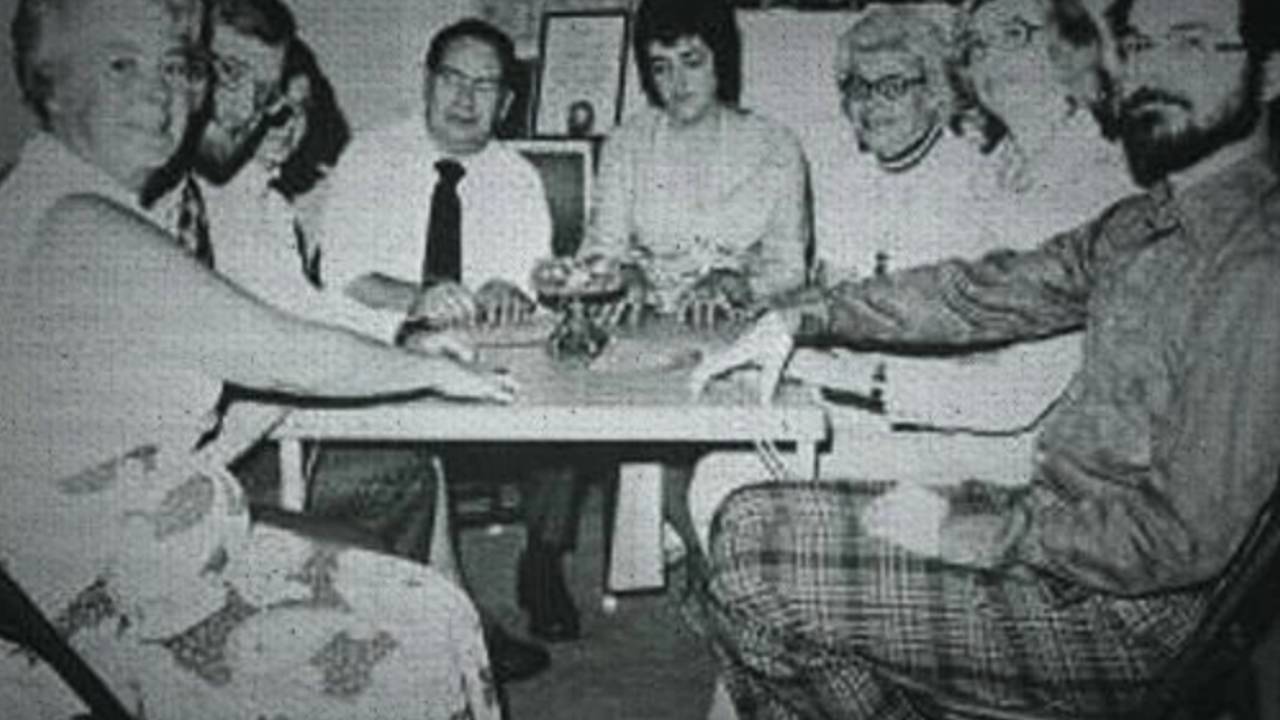
The room was quiet, but not serious. A small group sat around a table, the lights kept low, hands resting lightly on the surface. There was no sense of reverence and no expectation of contacting the dead. Everyone present knew the same thing from the start, the spirit they were attempting to reach had never existed. He had no grave, no lived history, no memory beyond what they had written themselves. They waited anyway.
At first, nothing happened. The table remained still. Questions were asked out loud, half-serious, almost casual. Then the table shifted. Not dramatically, just enough to be noticed. Someone laughed. Another question followed. A knock came in response. The tone in the room changed. Attention sharpened. What had begun as an exercise started to feel like a conversation.
This was the Philip Experiment, carried out in the early 1970s by members of the Toronto Society for Psychical Research. Unlike traditional séances, there was no claim of uncovering a forgotten spirit or lingering presence. The group deliberately created one. They named him Philip Aylesford, gave him a personality, a personal history, and a dramatic death. Philip existed only on paper and in shared imagination.
The purpose was straightforward. If séances worked because spirits survived death and communicated with the living, then attempting to contact someone who never lived should produce nothing at all. No movement, no responses, no suggestion of intelligence. The experiment was intended to test belief, not confirm it.
Instead, the sessions reportedly became increasingly active. The table rocked and tilted. Knocks answered yes or no questions. Lights flickered in response to requests. What stood out was not just the movement, but the consistency. Responses aligned with Philip’s invented backstory. The group believed they were interacting with something that behaved like a distinct personality, even though they all knew exactly where that personality had come from.
As the weeks went on, the atmosphere shifted. Early sessions were cautious and structured. Later ones became looser and more emotionally engaged. Music was introduced. The lighting was lowered further. Formal controls faded, replaced by a more relaxed setting. Along with that shift came stronger reported effects. The more attention and focus the group brought into the room, the more responsive the phenomena appeared to be.
No one involved claimed they had proven the existence of spirits. That was never the point. What unsettled observers then, and still does now, is that the experience felt real to those present. The movements were physical. The timing of responses appeared deliberate. Reactions in the room shifted from curiosity to unease as the sessions continued.
The Philip Experiment is often cited as evidence of subconscious psychokinesis, the idea that focused belief and group expectation can produce physical effects without conscious intent. Others point to ideomotor responses or subtle, unconscious movements amplified by group dynamics. These explanations are plausible, but they do not fully remove the discomfort at the centre of the experiment. Something happened in that room, and everyone there knew the story they were supposedly communicating with had been invented.
What keeps the experiment relevant is how easily it mirrors modern paranormal experiences. Group ghost hunts, Ouija board sessions, and even online communities devoted to haunted locations often begin the same way. Stories come first. Details are agreed upon. Attention narrows. When something finally happens, a sound, a movement, a flicker of light, it fits neatly into the framework already in place.
The Philip Experiment does not argue for the existence of spirits, nor does it dismiss the experiences of those involved. What it demonstrates is the power of belief, focus, and shared expectation when people gather with a common purpose. The participants knew Philip was fictional, yet the experience unsettled them all the same.
That tension, between knowing something is invented and experiencing it as present and responsive, is where the experiment refuses to settle comfortably into explanation. And it leaves a question that extends far beyond a table in 1970s Toronto. If something we know was created can still feel external and real, then understanding paranormal experiences may depend less on what people think they are contacting, and more on how those experiences come to feel undeniable in the moment.